
Humanities
Discover how Peicai's Humanities programme nurtures analytical, empathetic students through History, Geography, and Social Studies. Meet our teachers and explore our achievements and programmes.
Our People
Name, designation, teaching subjects and email address of our people
Name | Designation | Subjects | |
Mrs Lee-Tey Ai Hoon | HOD (Humanities) | History and Social Studies | |
Mr Jason Seng | SH (Social Studies) | Social Studies and History | |
Ms Zhou Wensi Eileen | ST (History) | Social Studies and History | |
Ms Ng Xin | Teacher | Social Studies and History | |
Ms Hana Syazwani | Teacher | Social Studies and History | |
Mr Nur Zamir | Teacher | Social Studies and History | |
Ms Therese Malini Pereira | Teacher | Social Studies | |
Mr Goh Wei Xuan | Teacher | Social Studies | |
Ms Safura Zulkifly | Teacher | Social Studies | |
Ms Liow Yi Xuan | Teacher | Social Studies | |
Ms Tay Kai Yi | Teacher | Social Studies | |
Ms Dewi | Teacher | Geography and Social Studies | |
Ms Karissa Chong | Teacher | Geography and Social Studies | |
Ms Koh Cin Dee | Teacher | Geography | |
Ms B Viveka | Teacher | Geography |
Learning Outcomes
In Peicai, the Humanities programme aims to nurture empathetic students who think critically and contribute meaningfully to society.
Through the various programmes, students are empowered to be:
Analytical. He/she thinks critically, actively synthetize information and is discerning.
Connected. He/she communicates effectively, work well in teams and takes responsibility for his/ her own learning.
Empathetic. He/she is a concerned citizen rooted in Singapore, is informed, and takes an active role in bettering the lives of others.
The approach to the teaching and learning of Humanities involves:
inquiry-based approach to allow students to construct their understanding through purposeful act of identifying problems, asking good questions, collecting data and analysing varied information sources, and
questioning strategies such as Paul’s Wheel of Reasoning so that students build thinking and reflection schemas to examine information critically.
discussion strategies such as Socratic Seminar so that students systematically question and examine issues and principles related to a particular content and articulate different points-of-view.
ACHIEVEMENTS
Humanities student competition awards by subject
Subject | Competition | Award |
|---|---|---|
Geography | 2025 NUS Geography Challenge | 2025 – Individual Bronze |
2026 NUS Geography Challenge | 2026 – Individual Silver | |
History | 2025 NLB Historical Scene Investigation | 2025 – 2 Bronze awards |
2025 NLB Prove It! Competition | 2025 – 2 Bronze awards | |
2025 MOE History Challenge | 2025 – Certificate of participation | |
Social Studies | 2025 Anglo-Chinese School (Independent) Model United Nations | 2025 – Certificate of participation |
2026 River Valley Model United Nations | 2026 – Certificate of participation |
2026 Department Programme & Highlights
The Albatross Files Exhibition Learning Journey
Students from the Secondary Four Pure History cohort embarked on an enriching learning journey exploring one of Singapore’s most pivotal moments — the Separation from Malaysia — through the newly revealed Albatross File exhibition. Hosted at the National Archives Museum, the exhibition offered fresh insights into the political and social circumstances surrounding Singapore’s independence, bringing history to life in a dynamic and interactive setting.
Students were particularly captivated by the innovative use of AI chatbots that simulated conversations with key historical figures from the 1960s. These engaging digital companions guided them through archival documents, rare footage, and personal correspondences, deepening their understanding of the challenges faced by Singapore’s leaders during that tumultuous period.
The experience reinforced the relevance of historical inquiry beyond textbooks, encouraging students to think critically about how past events continue to shape Singapore’s national identity today. By the end of the journey, students expressed a newfound appreciation for the resilience and foresight of Singapore’s early leaders — and an eagerness to continue uncovering the stories that define the nation’s heritage.
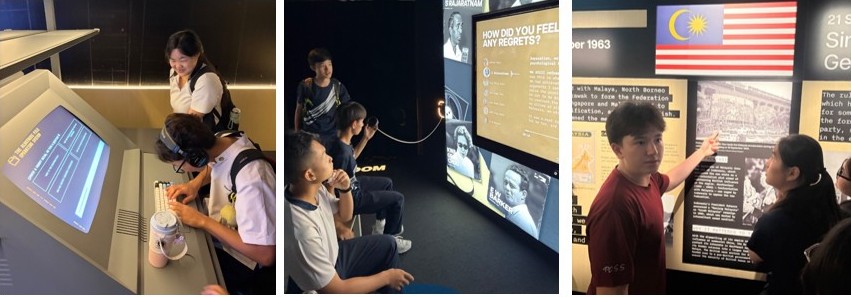
Student’s reflection :
Edelia Phua 4CN: From the albatross file exhibition, I got to read more in depth about how Singapore and Malaya got separated. This exhibition was extra special, as I got to see the actual letters and documents brought down from the olden days. It helped me better understand the cause and impact on both Malaya and Singapore, during and after the separation.
Ho Jing Wen 4CN: I learned a lot from the Albatross File Exhibition learning journey. Since young, I had always been taught that Singapore was kicked out of Malaya and that the separation was not planned at all. However, after attending the learning journey, I discovered a different perspective which was Singapore had planned the separation with Malaya and that it was not as sudden as I once thought. The interactive exhibition and well produced short films helped me better understand how the separation came about, and I also had the opportunity to read actual letters written during that period, which made the experience more meaningful and authentic. Overall, I really enjoyed the learning journey as it deepened my understanding of Singapore’s history and allowed me to see it from a new perspective.
Nadia Soh 4CN: The Albatross File exhibition shows that the separation was planned by both Singaporean and Malaysian ministers, who negotiated and mutually agreed on it. The exhibition featured documents and recordings from that period, providing valuable insights into the events leading up to the separation. In addition, the video presentation offered a detailed explanation of the process, which helped to clear my doubts about why Singapore and Malaysia had to separate. Overall, it was a very enriching and enjoyable learning journey for me.
NUS Geography Challenge
A team of four students represented the school at the NUS Geography Challenge 2026 in February this year. Organised annually by the NUS Department of Geography and the NUS Geographical Society, with support from the Ministry of Education, the competition seeks to ignite students’ passion for Geography and deepen their interest in this dynamic discipline.
This year’s theme, “City for Tomorrow: Shaping our Liveable Future,” challenged participants to evaluate existing infrastructure and propose innovative solutions within Singapore’s context. Through this, students were empowered to reimagine and create liveable spaces that cater to the needs of diverse communities.
The team, comprising of Chor Yu Jie (4CN), Austin Kong Jia He (4EE), Adriel Ng Jun De (4EE) and Chen Hongyu (4EE), competed against 472 students from 118 schools in both the individual and team components. The components tested not only their understanding of geographical concepts but also their ability to think critically to problem-solve and collaborate effectively under the pressure of time.
In preparation for the competition, the team demonstrated strong commitment and perseverance, dedicating many hours to preparation sessions and practice after school. Despite their academic commitments, they demonstrated strong discipline in managing their time while deepening their content understanding and refining their competition strategies. Their hard work and determination were evident throughout the event.
Amidst the strong competition, we are pleased to announce that Chor Yu Jie (4CN) was awarded the Silver Award for the Individual Component.
We congratulate the team for their commendable efforts and extend our appreciation to the staff and parents who supported them throughout their journey. Their accomplishments reflect our school’s commitment to nurturing both academic excellence and holistic development.
Well done to our Geography stars!
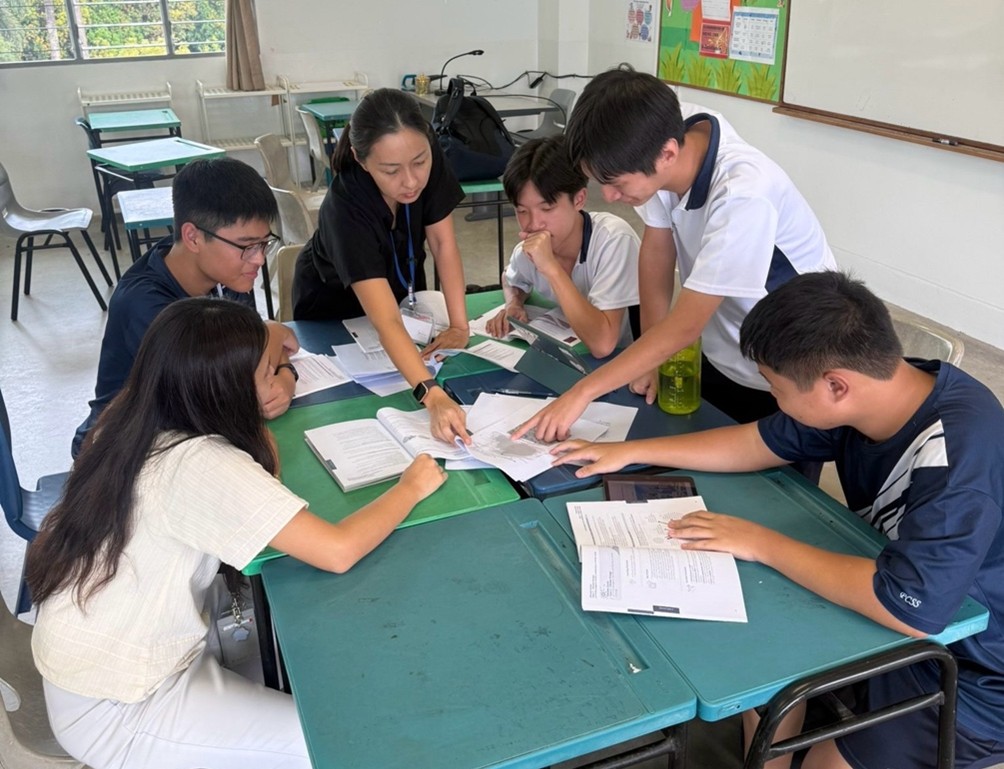
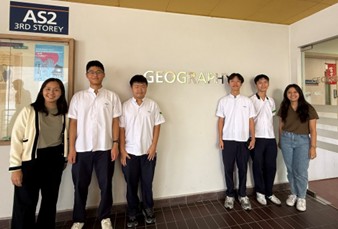
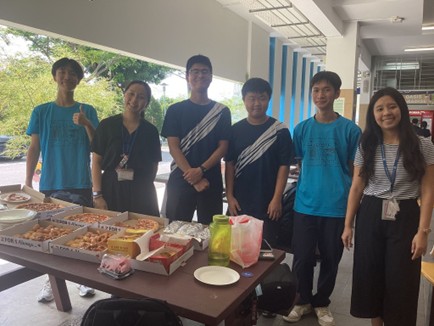
Students’ reflections:
Chor Yu Jie (4CN): Throughout the preparation for the Geography Challenge, I faced many difficulties and challenges and even doubted myself as I couldn’t understand many of the questions. Thanks to the support of Ms Koh & Ms Karissa, I was able to overcome the challenges and understand the concepts better. During the actual competition I still had my doubts but the preparation had helped me answer questions more accurately.
Austin Kong Jia He (4EE): When I was first invited to take part in the Geography Challenge, I was unsure of what to expect as an Elective Geography student. As a result, I felt that my content knowledge was not as strong as others. However, through the many practice papers and training sessions, I learned fascinating facts that piqued my interest. I found this especially valuable as it gave me a new perspective of Geography, not just as a subject but as lens for understanding the world.
Adriel Ng Jun De (4EE): The NUS Geography Challenge was a truly unique and memorable experience. It taught me invaluable real-world lessons that extend beyond the regular classroom. Although the team component was challenging, we remained calm and persevered with determination. Lastly, I would like to thank the teachers for making every session useful and enjoyable, as well as my teammates for making this an unforgettable experience.
River Valley Model United Nations
A team of eight students represented the school at the River Valley Model United Nations (RVMUN) 2026 held from 16 to 18 March this year. Organised by River Valley High School, the conference serves as a premier platform for young leaders to engage in global affairs, fostering a deeper understanding of international relations and the complexities of modern diplomacy.
This year’s theme, “Verbis Creare” (To Create with Words), challenged participants to navigate a Volatile, Uncertain, Complex, and Ambiguous (VUCA) world. The conference encouraged delegates to harness the transformative power of effective communication, moving beyond mere debate toward constructive dialogue that shapes a better global future.
The team, comprising Jeba John Mathew Jezneel (4EE), Jervin Yeo Kai Jie (4EE), Bernice Chen Qianning (4CN), Sofia Grace Osborne (4CN), Rayyan Mika Bin Rohaidi (4CN), Law Ying Ying (4CN), Png Yan Wen Gwyneth (4CN), and Norzwana Halisha Binte Rashdin (4PN), stepped into the shoes of diplomats to advocate for international solutions. Throughout the three-day event, which included a keynote dialogue session and rigorous committee sessions, the students were tested on their ability to think critically, negotiate persuasively, and collaborate effectively under pressure.
In preparation for the conference, the team demonstrated remarkable commitment and intellectual curiosity. They dedicated numerous hours after school to researching complex global issues and refining their position papers. Despite their demanding academic schedules, they showed great discipline in mastering the art of diplomacy and parliamentary procedure, ensuring they were well-equipped to represent their assigned nations with distinction.
The experience allowed our students to not only sharpen their public speaking and analytical skills but also to develop a more nuanced worldview. By engaging with peers from various schools, they learned the value of empathy and the necessity of compromise in resolving global conflicts.
We congratulate the team for their commendable efforts and extend our appreciation to the staff and parents who supported them throughout this journey. Their participation reflects our school’s commitment to nurturing global citizens who are ready to lead and create positive change through the power of their words.
Well done to our aspiring diplomats!
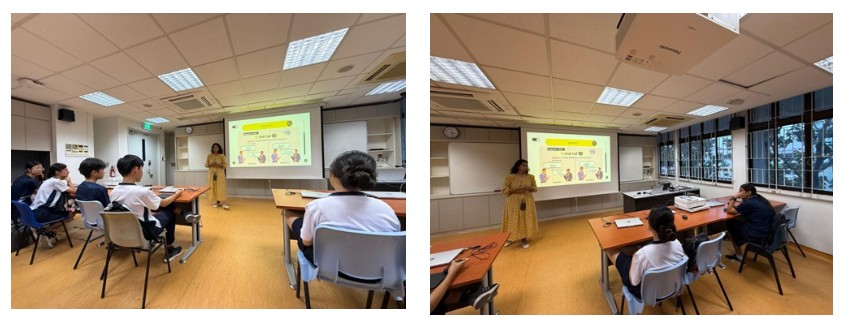
The team and teachers during one of the preparation sessions
Students’ reflections:
Law Ying Ying (4CN): "I walked into the opening ceremony feeling quite nervous about the public speaking aspect. The first day was a struggle, but the supportive environment of our team and the council encouraged me to take that first step. By the third day, I wasn't just participating; I was leading discussions. This journey from being a silent observer to an active delegate has given me a new sense of self-assurance that I will carry back to my daily school life."
Rayyan Mika Bin Rohaidi (4CN):"The steep learning curve of a MUN conference was intimidating at first. I was worried that my research wouldn't be enough to keep up with more experienced delegates. However, the training and the collaborative nature of the unmoderated caucuses helped me see Social Studies through a much more practical lens. It piques your interest when you realize the theories we learn in class actually dictate how countries interact in real time."
Interdisciplinary Learning Journey to Treelodge@Punggol
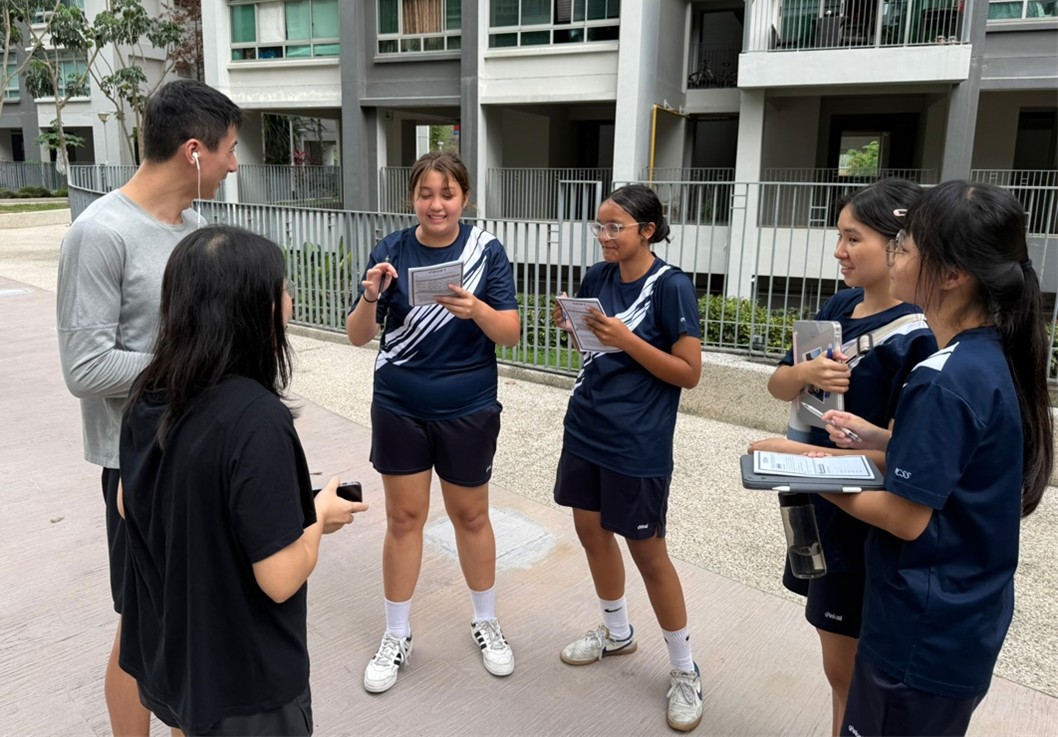
In Term 2, the Humanities and Science department organised an interdisciplinary learning journey for the Secondary 2 students to Treelodge@Punggol. As Singapore’s first eco-precinct designed to harness natural elements to promote sustainable living, Treelodge@Punggol provided an authentic and meaningful setting for students to apply concepts from both Geography and Science in the context of real-world housing development.
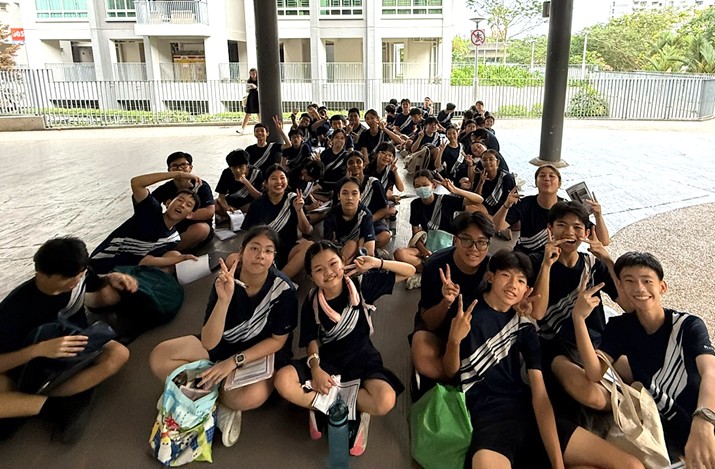
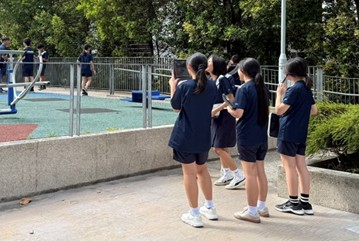
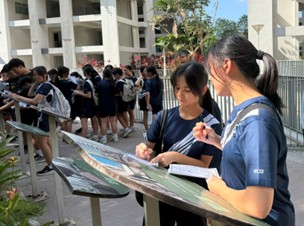
During the visit, students engaged in on-site observations and participated in various activities across four stations at the Eco-Deck. Through these activities, they applied Geography concepts to examine how housing design and the distribution of amenities influence the quality of life within a community. At the same time, they explored key Science concepts such as energy transfer, heat management and sustainability, gaining a deeper understanding of how eco-friendly features are incorporated into contemporary residential developments to promote environmental sustainability.
The learning journey was also an integral part of the students’ Geographical Investigation (GI) assessment on “How do the amenities in Punggol neighbourhood meet the needs of residents?” Students had the opportunity to collect primary data through photo annotations and conduct interviews with residents. This hands-on experience allowed them to develop important inquiry and fieldwork skills, while also building their confidence in engaging with members of the public. Many students found this particularly meaningful as it was their first experience conducting fieldwork beyond the classroom.
This experiential learning journey encouraged students to consider diverse perspectives and reflect on their role as an active and concerned citizen in contributing to a sustainable and liveable Singapore. It also deepened their appreciation of how different subject disciplines are interconnected, and how the knowledge and skills they acquire in school can be applied meaningfully in the real world.
Students’ reflections:
Chan Jeun Hong (2CY): During my learning journey to Treelodge@Punggol, I learnt that a housing estate can be designed to meet the needs of different people. The exercise corner showed me how residents can stay active, while features like ramps, railings and wide pathways make it easier for the elderly and people with disabilities to move around. Walking around with my friends made the experience more enjoyable as we were able to observe these features together while having a fun time. Overall, I benefitted from this learning journey by experiencing a housing estate equipped with many different amenities that meet the needs of different residents.
Irina Gurung (2PN): During my visit to Treelodge@Punggol, I learnt that residents could grow their own crops in community gardens. This promotes sustainability and provides access to fresh food, which is not commonly seen in other HDB estates! The most memorable part of the learning journey was having the courage to interview residents alongside my friends. Although we faced challenges such as language barriers, we persevered and tried our best to understand their responses. This experience was especially meaningful as it allowed me to learn more about the different types of amenities available and how they meet residents’ needs. At the same time, I was able to build my confidence and improve my communication skills through interacting with members of the public.
Toh Xi Tong (2MN): The learning journey to Treelodge@Punggol was a fun and engaging experience that allowed me to better understand how Singapore designs environmentally-friendly housing and provides amenities that benefit residents. Through this experience, I learnt how these features are carefully planned to improve efficiency and make living spaces more comfortable. Overall, it was a memorable and meaningful experience.
Zachary Yohana Chua (2RE): The learning journey provided me with a valuable hands-on experience, where I could observe real-life examples of sustainable planning. This helped me better understand the sustainable management of housing, compared to relying on secondary data from the Internet where I could only imagine these environments. My favourite part of the learning journey was exploring Treelodge@Punggol and taking photos of the various amenities. This allowed me to think more deeply about how these features benefit both residents and the environment.
Syllabus
Humanities syllabuses by level and subject
Upper Secondary NA level | |
Upper Secondary O level | |
Upper Secondary O level | |
Upper Secondary NA level | |
Upper Secondary O level | |
Upper Secondary O level | |
Upper Secondary NT Level | |
‘O’ Level Humanities (Social Studies, Literature in English) (opens in new tab) | |
‘N(A)’ Level Humanities (Social Studies, Literature in English) (opens in new tab) | |