

Fireside Conversation with Dr Ernest Tan
Assembly Talk by Assistant Professor Dr Ernest Tan: Embracing an Unconventional Journey
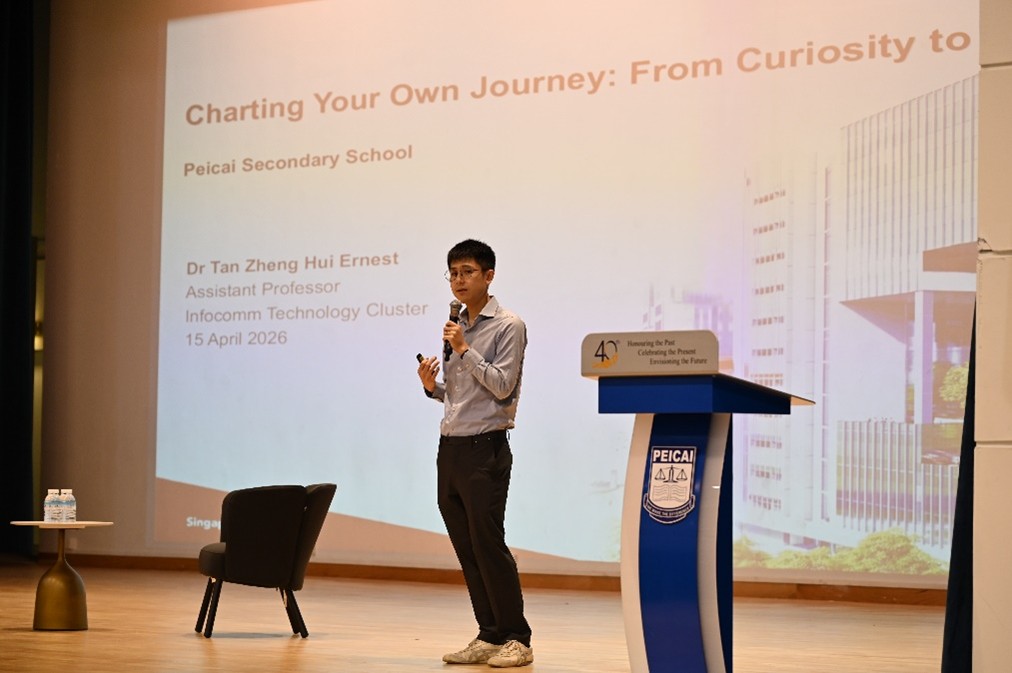
During the Assembly Talk on 15 April, we invited Singapore Institute of Technology, Assistant Professor Ernest Tan to share his unconventional educational journey. He went through Normal Tech in secondary school, took his N-levels, went to ITE, then Polytechnic and eventually NTU where he obtained his doctorate in Computer Engineering.
|
|---|
|
Dr Tan sharing with Peicaians his journey during assembly. |
Dr Tan engaged the students with a simple yet thought-provoking question: “Who knows exactly what you want to do in the future?” While some students raised their hands confidently, many hesitated. Reassuringly, Dr Tan shared that he once belonged to the “unsure” group himself.
|
|---|
|
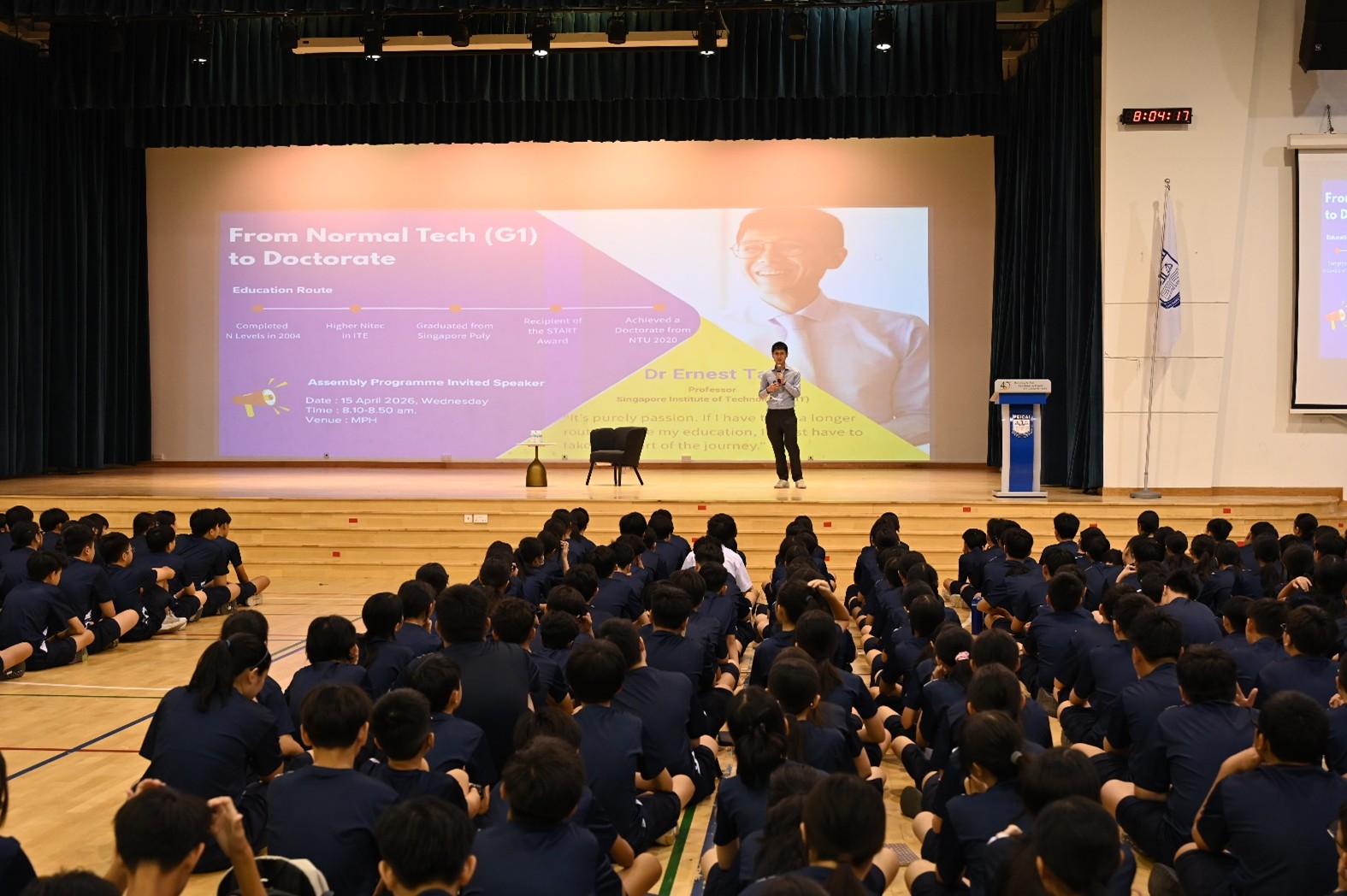
Dr Tan shared his unconventional educational pathway. |
He highlighted that his journey was far from conventional, reinforcing
the idea that educational and career pathways are rarely linear. His educational
journey began with the completion of his N Levels in 2004, after which
he progressed to Higher Nitec at ITE, graduated from Singapore Polytechnic,
received the START Award, and eventually attained his Doctorate from NTU
in 2020. Although initially hesitant, he chose to take the leap with encouragement
from family and friends, demonstrating his belief that passion and perseverance
can lead to unconventional yet meaningful directions in life.
Motivated to apply his research to real-world problems, Dr Tan went on
to work at A*STAR. Today, he leads artificial intelligence research at
the Singapore Institute of Technology (SIT) and contributes to shaping
future innovations.
Reflecting on his journey, Dr Tan shared that if someone had told his
younger self that he would one day become a scientist, he would not have
believed it. His story reminds students that success does not follow a
fixed path. Instead, it is shaped by curiosity, resilience, and a willingness
to keep learning, unlearning, and relearning.
|
|---|
|
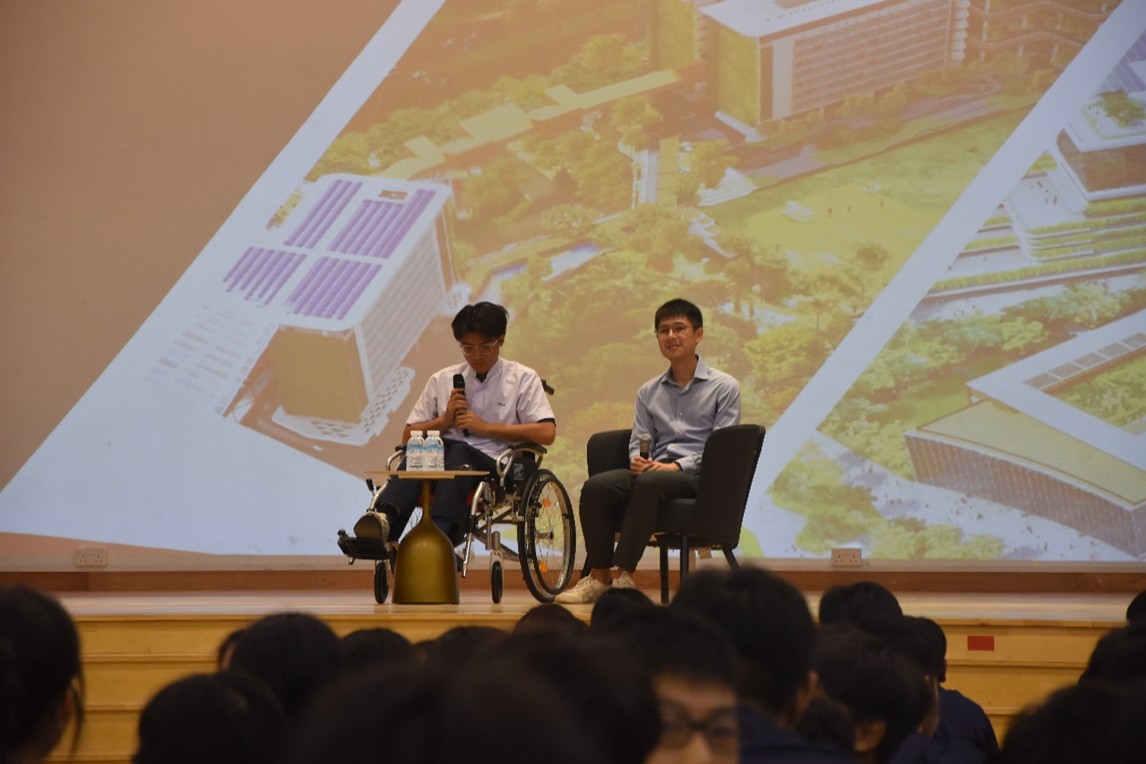
Fireside chat conversation hosted by student moderator, Castillo Zian (4EE) with Dr Tan. |
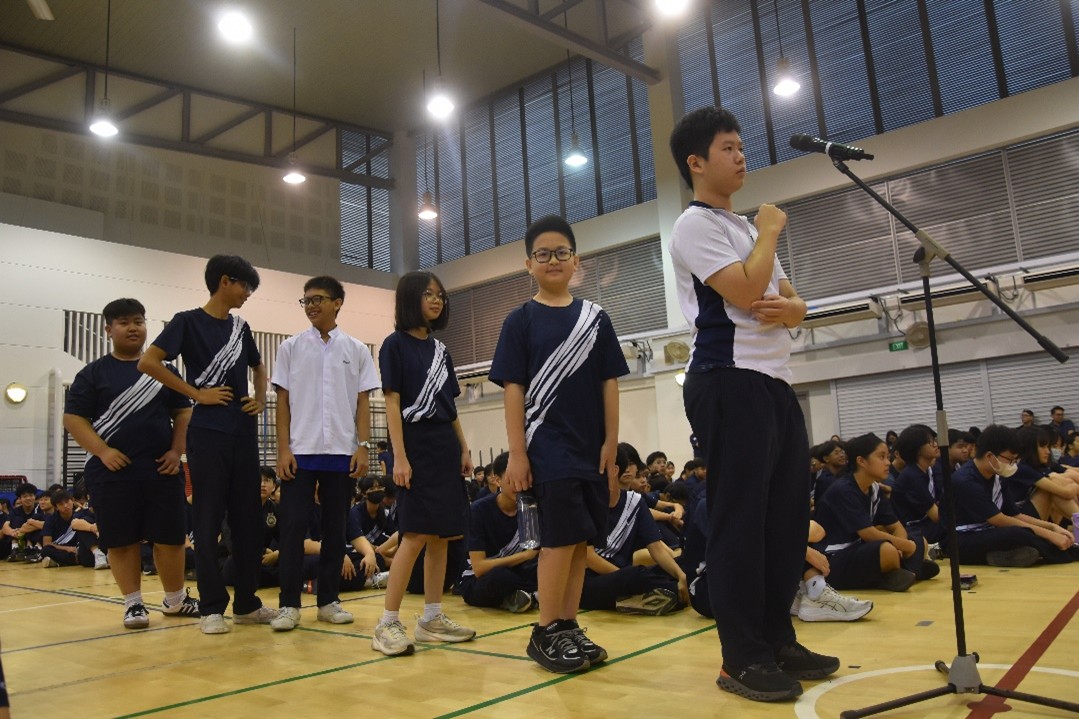
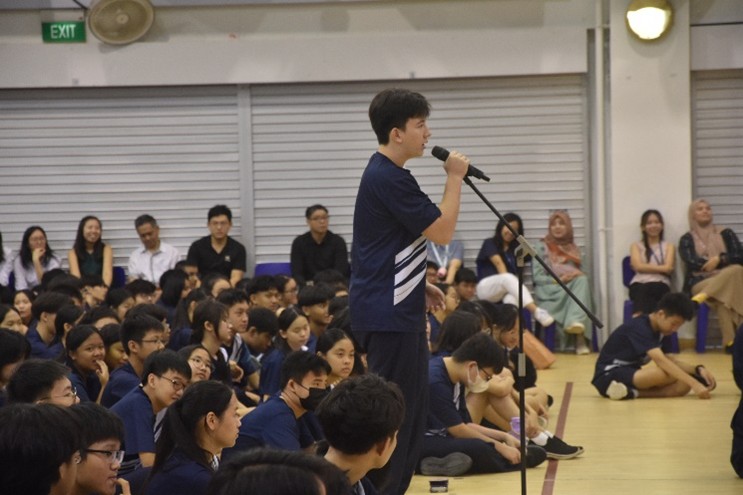
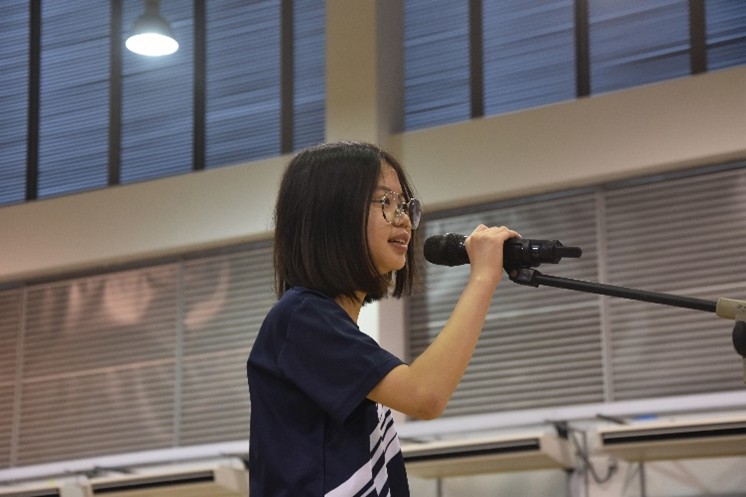
The assembly concluded on an engaging note, with students eagerly lining up in an orderly manner to ask Dr Tan questions. Their thoughtful queries reflected a genuine interest in his experiences and insights, making the session both meaningful and interactive.
|
|---|
|
Peicaians came forward in an orderly manner to ask questions. |
|
|
|---|---|
|
Peicaians asked questions about Dr Tan’s educational pathway and the choices that shaped his interests. |
|
The following presents the students’ questions together with Dr Tan’s responses.
Q1: What if you do not perform well in a test? How do you motivate yourself to move forward?
Dr Tan: Consistency is key in one’s educational journey. When I did not
perform well, I made it a point to reflect on the concepts I had not fully
understood. I would then take active steps to bridge those gaps, such as
revisiting my textbooks or practising additional questions independently.
Q2: What factors should we consider when selecting a course in polytechnic?
Q3: What are some careers that you could recommend us?
Dr Tan: Every individual has different circumstances and considerations
when it comes to choosing a career path, selecting polytechnic courses,
or deciding between JC and polytechnic. Regardless of the path you take,
it is important to reflect on whether it will be meaningful and fulfilling
for you in the long term, particularly over the next five to ten years.
Q4: What should guide our decision between junior college and the polytechnic education pathway?
Dr Tan: In my own journey, I found the process of elimination helpful
— narrowing down my options by ruling out courses in ITE, polytechnic,
and university that I did not see myself thriving in. I applied the same
approach when making career decisions.
I hope this provides a useful starting point as you begin exploring your
pathway beyond secondary school.
The exchange provided students with valuable opportunities to deepen their
understanding and draw inspiration from his unconventional educational
journey. We would like to extend our heartfelt appreciation to Dr Tan for
his time and insightful sharing with our students, which also served as
meaningful motivation for students as they prepare for their upcoming WA2
examinations.